- Published
- Victor Gaier
- 5 min Read
How Video Intercom Systems Improve Commercial Visitor Management
Summarize With:
In This Article
Key Takeaways
- Video intercom systems allow staff to visually verify visitors before granting entry.
- Businesses can communicate with guests, contractors, vendors, and delivery personnel before opening controlled doors.
- Integration with access control can support remote door release for authorized users.
- Smartphone connectivity can help staff respond to visitors when they are away from the entrance.
- Professional installation helps ensure reliable video, audio, connectivity, and integration with other security systems.
A well-managed visitor process helps commercial buildings control who enters without creating unnecessary delays at the door. Video intercom systems allow staff to see and communicate with visitors before granting access, making visitor verification more controlled and convenient. When integrated with access control and other security systems, they can support a more organized approach to commercial visitor management.
What Is Commercial Visitor Management?
Commercial visitor management is the process of handling guests, contractors, vendors, delivery personnel, and other non-employees entering a business property.
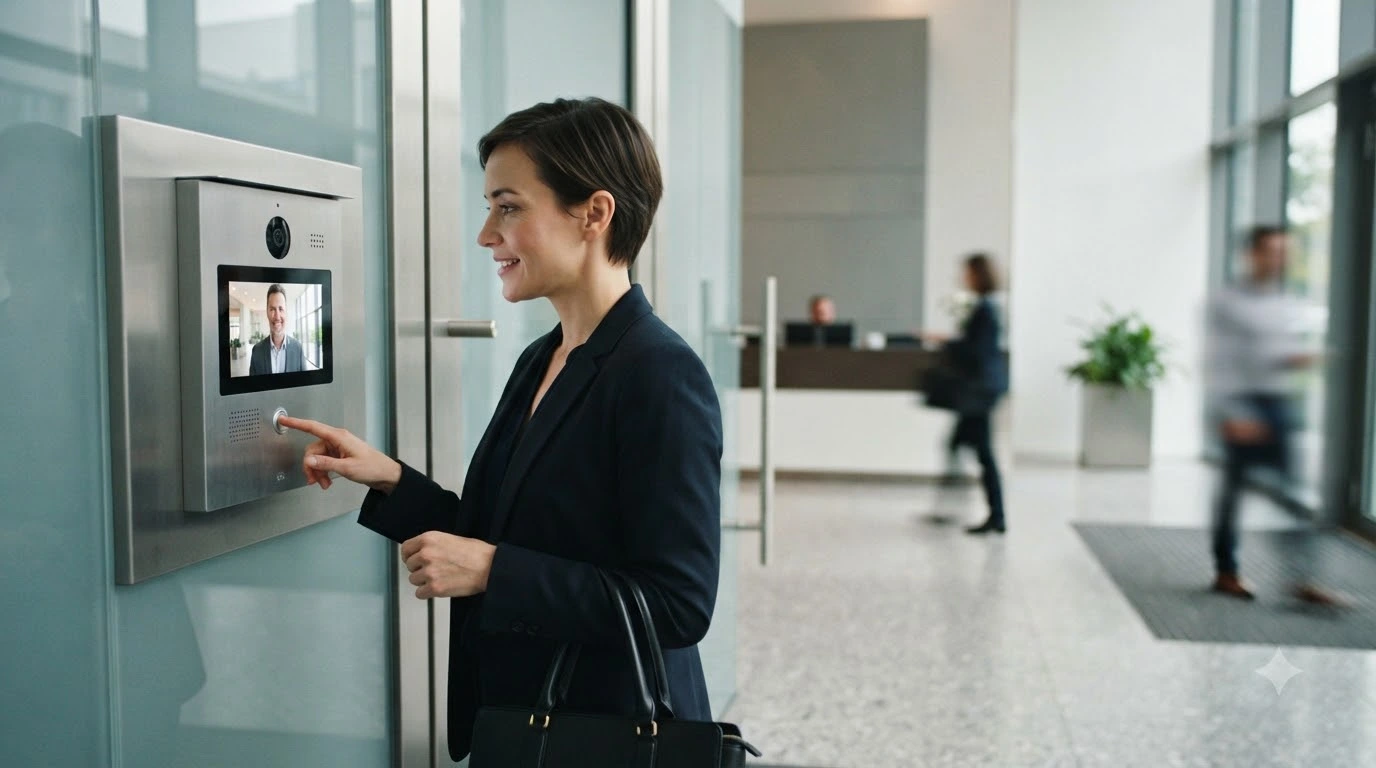
Traditional visitor handling may rely on reception staff, sign-in sheets, or basic audio intercoms. A commercial video intercom system adds visual verification, allowing staff to see who is requesting entry before deciding whether to open the door.
This is particularly useful for businesses with controlled entrances, limited reception coverage, multiple access points, or visitors arriving outside normal business hours.
How Video Intercom Systems Improve the Visitor Entry Process
A video intercom can create a simple, controlled visitor entry process:
- Visitor arrives: The visitor uses the intercom at a designated entrance.
- Staff receive the request: An employee or authorized user receives the call.
- Visitor verification: Staff can see and communicate with the visitor.
- Access decision: The authorized person decides whether access should be granted.
- Controlled entry: The door can be unlocked remotely when the system supports door release integration.
Key Ways Video Intercom Improves Commercial Visitor Management
1. Visual Visitor Verification
One of the main advantages of a video intercom system for business is the ability to visually verify visitors before allowing entry.
Staff can see whether the person is a scheduled guest, contractor, delivery driver, employee, or someone they do not recognize. This provides more information than an audio-only conversation.
2. Controlled Entry
Video intercom systems can help businesses separate communication from physical access. Staff can communicate with a visitor first and then approve entry when appropriate.
When connected with compatible access control and door hardware, the system can also support remote door unlocking.
3. Better Handling of Deliveries and Contractors
Commercial properties often receive deliveries, maintenance personnel, vendors, and contractors throughout the day. A video intercom allows staff to communicate with people at controlled entrances without immediately opening the door.
Video intercom systems benefit warehouses, offices, retail properties, medical facilities, and other buildings where visitors may use separate service or employee entrances.
Support for Unattended Entrances
Not every commercial entrance has a receptionist or security employee available throughout the day. Smartphone-connected video intercom solutions can allow authorized users to respond remotely, depending on the system configuration.
This gives businesses another way to manage visitor requests when staff are working elsewhere in the building.
How Video Intercom Works With Access Control
A video intercom and access control system serve different but complementary purposes.
The intercom helps staff see and communicate with visitors, while access control determines how doors are secured and who is authorized to enter.
For example, an employee may receive a video call from the main entrance, speak with a delivery driver, verify the reason for the visit, and remotely release the door if appropriate.
Video Intercom for Different Commercial Buildings
Video intercom systems can support visitor management across different commercial environments.
- Offices: Help employees verify clients, vendors, and delivery personnel at entrances.
- Warehouses: Support controlled entry for drivers, suppliers, contractors, and employees.
- Healthcare facilities: Help staff manage visitors while maintaining controlled access to specific areas.
- Schools: Provide another layer of visitor verification at designated entrances.
- Multi-tenant buildings: Help building management handle visitors across shared entrances and individual tenant spaces.
The system can be designed around the number of entrances, users, buildings, residential properties, and security requirements.
Remote Visitor Management with Video Intercom
Modern video intercom systems can provide remote visitor management through smartphone or tablet applications.
Depending on the system, an authorized user may be able to:
- Receive a visitor call remotely
- View the entrance through HD video
- Communicate using two-way audio
- Receive instant notifications
- Unlock a compatible door remotely
- Access cloud or local recordings when supported
Remote functionality can be useful for businesses with multiple locations, limited reception coverage, or employees who are not always stationed near the main entrance.
How Video Intercom Works With CCTV and Other Security Systems
Video intercoms can become part of a broader commercial security system rather than operating independently.
For example, CCTV security cameras can provide wider surveillance coverage, while the intercom focuses on communication and visitor verification at an entrance. Access control can manage door permissions, while intrusion alarms can detect unauthorized entry.
This type of integration can help businesses coordinate different security functions around important entry points.
Why Choose Cisco Fire Systems for Your Video Intercom System?
Choosing a video intercom provider involves more than selecting equipment. The system should match the building’s entrances, visitor flow, access requirements, and existing security infrastructure.
Cisco Fire Systems provides commercial video intercom solutions designed around individual property requirements. The installation process includes site assessment, system design, professional installation, testing, training, and ongoing support.
The systems can also be configured to work with access control and other security technologies, helping businesses create a coordinated approach to visitor entry management.
Conclusion
Effective visitor management requires more than simply opening and closing a commercial entrance. Video intercom systems give businesses a practical way to see, communicate with, and verify visitors before granting access. When combined with access control, CCTV, and other security technologies, they can support a more organized visitor entry process.
Cisco Fire Systems can help businesses plan and install video intercom solutions based on their entrances, users, building layout, and security requirements. A professionally designed system can provide a practical foundation for controlled visitor communication and entry management.
Frequently Asked Questions
1. How does a video intercom improve visitor management?
A video intercom allows staff to see and communicate with visitors before granting access, helping businesses verify visitors and manage controlled entrances.
2. Can video intercom systems control commercial building access?
Yes. When integrated with compatible access control and door hardware, video intercom systems can allow authorized users to remotely release doors.
3. Can staff manage visitors remotely?
Many modern systems support smartphone-based video viewing, two-way communication, notifications, and remote door unlocking, depending on the system configuration.
4. Can video intercom integrate with CCTV and access control?
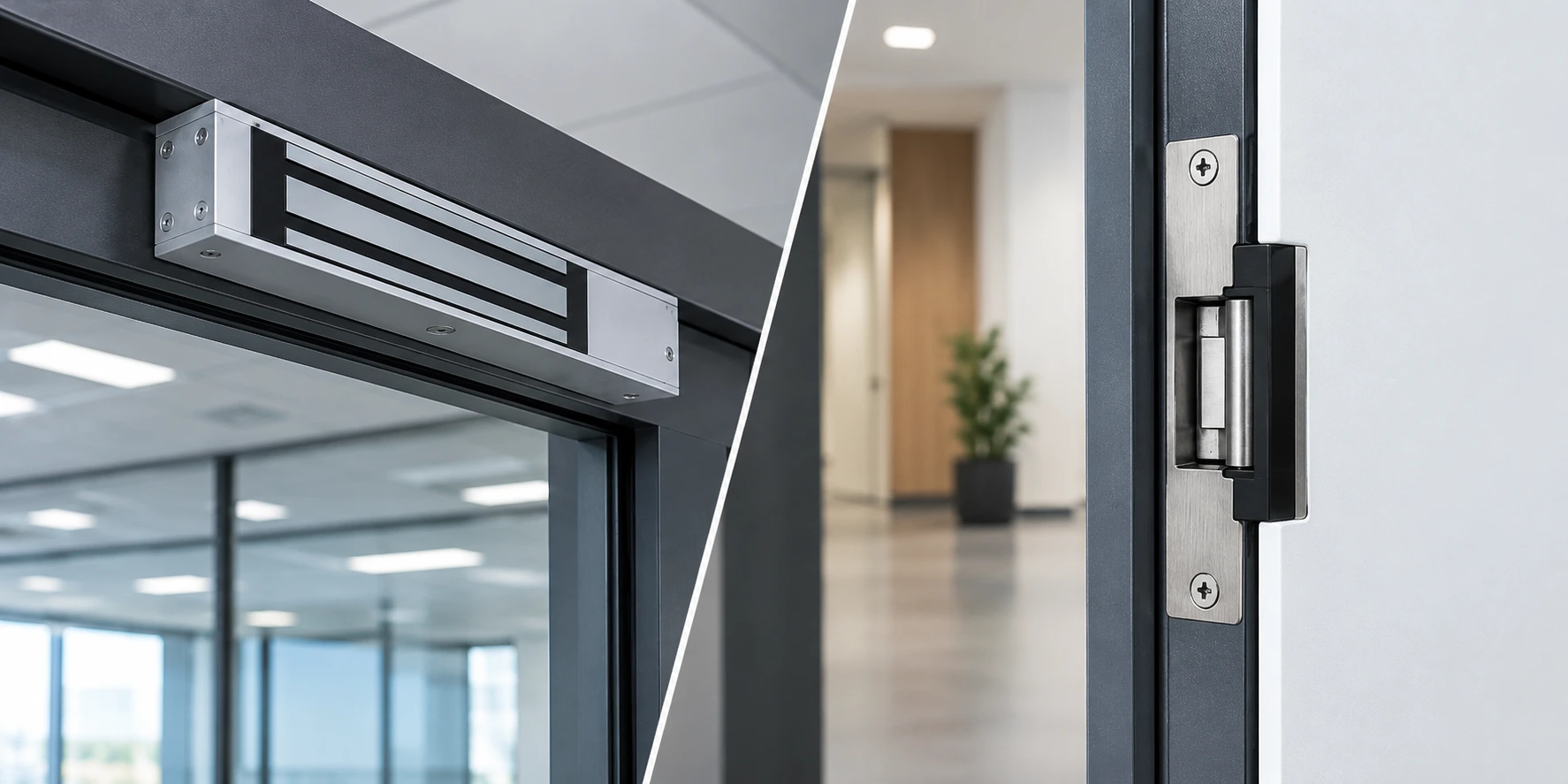
Yes. Video intercoms can integrate with CCTV, access control, magnetic locks, and other security systems to support coordinated entry management.
5. Where should businesses install video intercom systems?
Common locations include main entrances, employee entrances, loading areas, reception entrances, service entrances, and other controlled access points.
About the author

Victor Gaier
Victor Gaier is an Electrical Engineer with 40+ years of experience specializing in fire alarm systems, CCTV, access control, intrusion alarms, and commercial security solutions across Nassau County and Long Island.
Share this article
Frequently Asked Questions
1. How does Cyberx protect business data?
2. Is Cyberx suitable for small businesses?
3. Does Cyberx support cloud security?
4. How quickly does Cyberx respond to threats?
5. Can Cyberx integrate with existing systems?
Related Blogs
Explore more expert insights, tips, and updates on fire protection and security solutions.

Need Assistance? Get Your Free Site Survey
Protect your home or business with reliable fire protection and security solutions from Cisco Fire Systems. Tell us about your property and security needs, and our team will recommend the right solution for you.