
- Published
- Victor Gaier
- 5 min Read
What is a Video Intercom System and How Does It Work?
Summarize With:
In This Article
Modern commercial buildings need reliable ways to manage visitors and control entry. A locked door alone does not tell employees who is outside or why they need access. A video intercom system combines video and two-way audio communication, allowing authorized users to see and speak with visitors before deciding whether to grant access.
These systems can support offices, commercial buildings, warehouses, schools, multifamily properties, and other facilities with controlled entrances. Depending on the configuration, a video intercom can also connect with access control, electronic door locks, and other security technologies.
Understanding how a video intercom works, its components, benefits, and installation requirements can help businesses choose a solution that fits their property.
What is a Video Intercom System?
A video intercom system is a communication and entry management solution that allows an authorized user to see, hear, and communicate with a visitor before providing access.
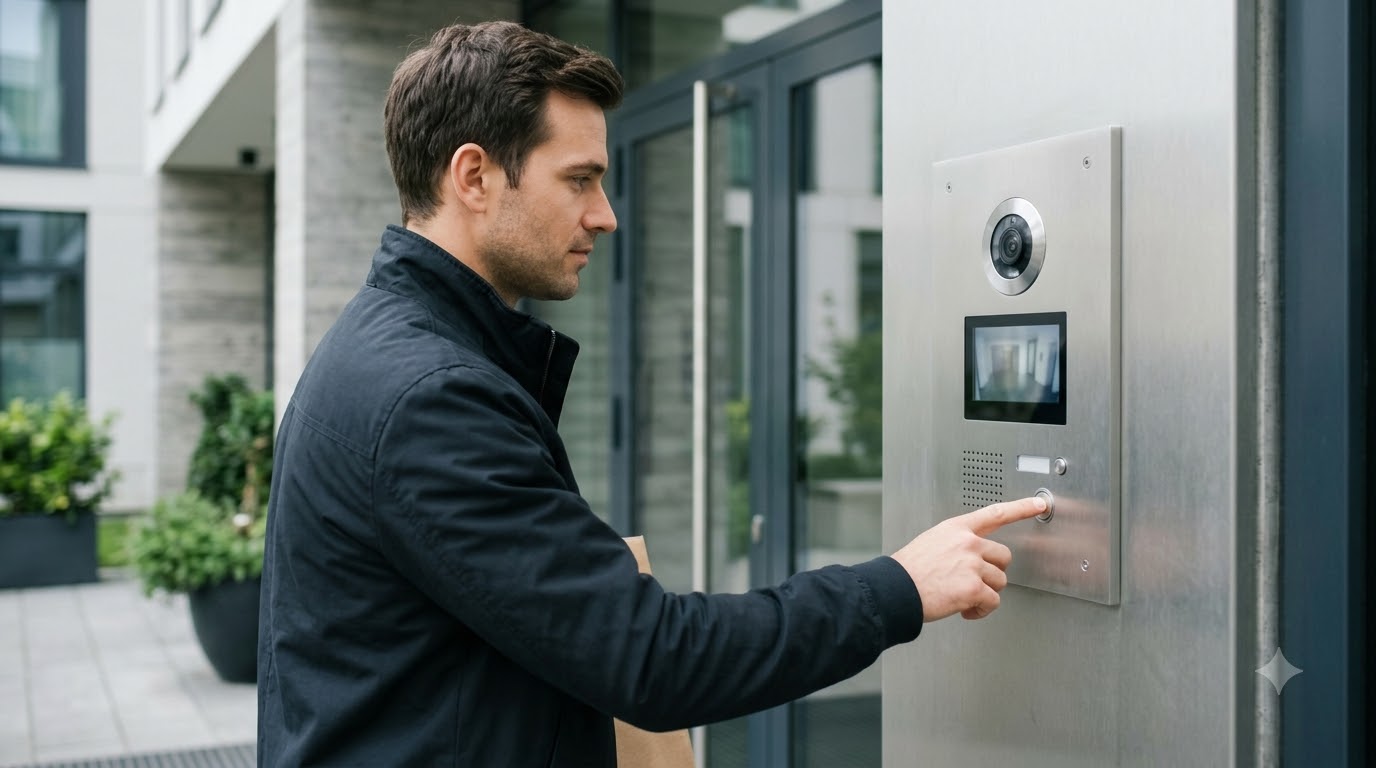
A typical system includes an entrance panel with a camera, microphone, speaker, and call button. When a visitor requests entry, the system sends the call and video to an indoor monitor or another authorized device.
The user can communicate with the visitor and, when connected to an appropriate door release system, remotely allow access.
How Does a Video Intercom System Work?
The basic process of a video intercom system is straightforward:
1. Visitor Initiates a Call
A visitor approaches a protected entrance and presses the call button or selects the appropriate person or tenant through the entry panel.
2. The Camera Captures Video
The integrated camera captures the visitor and sends the video to the designated indoor monitor or connected device.
3. Two-Way Audio Begins
The microphone and speaker allow the visitor and authorized user to communicate. The user can ask questions, provide instructions, or confirm the purpose of the visit.
4. The Visitor is Verified
The user can visually verify the person before deciding whether to provide access.
5. Access is Granted or Denied
If access is appropriate, the authorized user may activate a connected door release. If access is not approved, the door remains secured.
This process combines visitor communication and visual verification with controlled entry.
What are the Main Components of a Video Intercom System?
Entry Panel
The entry panel is installed at the entrance where visitors request access. It may include a camera, call button, microphone, speaker, keypad, directory, or other features.
Camera
The camera provides a visual view of the visitor. Proper placement is important to ensure that the camera captures an appropriate view of the entrance and visitor.
Indoor Monitor
An indoor monitor allows authorized users to receive calls, view visitors, communicate with them, and potentially release the connected door.
Some systems can also send calls or notifications to computers, smartphones, or other connected devices.
Microphone and Speaker
These components provide two-way audio communication between the visitor and the authorized user.
Door Release
A video intercom can connect with an electronic door release or access control system. When configured appropriately, an authorized user can release the door remotely after verifying the visitor.
Network and Power Infrastructure
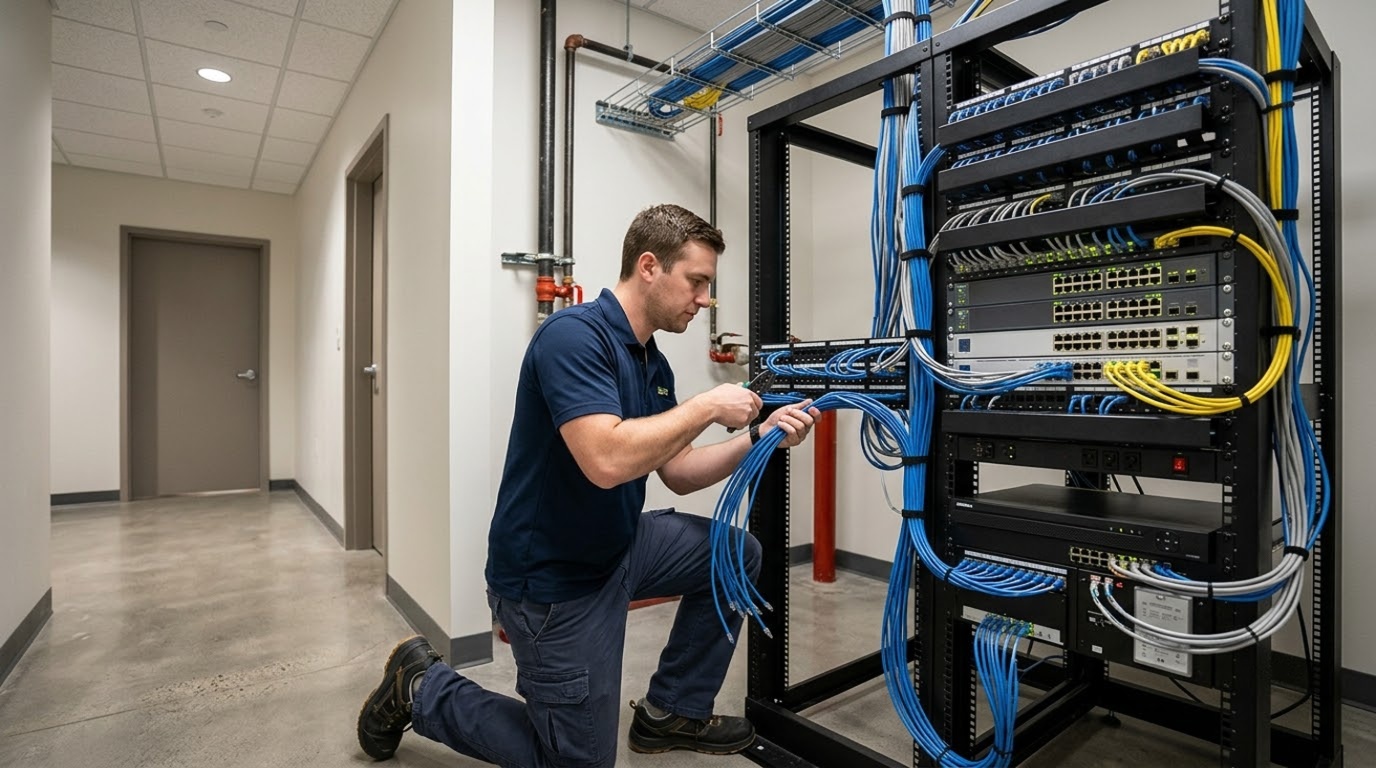
IP video intercom systems can use network infrastructure to communicate between devices. Depending on the equipment, Ethernet and Power over Ethernet, or PoE, may be used for connectivity and power.
Proper infrastructure planning is important for commercial installations, particularly when a system needs to connect with other security technologies.
What are the Different Types of Video Intercom Systems?
Wired Video Intercom Systems
Wired systems use physical cabling between components. They can be suitable for new construction, renovations, or properties with existing cabling infrastructure.
Wireless Video Intercom Systems
Wireless systems can provide greater installation flexibility where installing new cable is difficult. Network coverage, signal reliability, power, and building conditions should be considered before selecting this option.
IP Video Intercom Systems
IP video intercom systems communicate through network infrastructure. They can provide flexible connections between entrances and authorized users when a suitable network is available.
Mobile-Connected Video Intercom Systems
Some systems can send visitor calls or notifications to authorized mobile devices. This can allow employees or property managers to respond even when they are away from a dedicated indoor station.
The appropriate type depends on the property’s layout, infrastructure, number of users, entrance requirements, and future expansion plans.
What are the Benefits of Video Intercom Systems for Businesses?
Visual Visitor Verification
A video intercom lets authorized users see visitors rather than relying only on voice communication.
Controlled Entry
When integrated with a suitable door release or access control system, the user can communicate with a visitor before allowing access.
Remote Communication
Depending on the system, employees and property managers can respond to visitors without physically walking to the entrance.
Better Visitor Management
Receptionists and security personnel can use video intercoms to communicate with visitors, contractors, delivery personnel, and guests at controlled entrances.
Added Security
A video intercom can complement commercial security cameras, access control systems, and intrusion alarms. It provides another point of communication and visitor verification rather than replacing other security technologies.
Improved Convenience
Employees can communicate with visitors and provide entry instructions without leaving their work areas. This can be especially useful for buildings with multiple or restricted entrances.
How Does a Video Intercom Differ From a Regular Audio Intercom?
The main difference is the addition of video.
Feature | Audio Intercom | Video Intercom |
Two-way audio | Yes | Yes |
Visitor video | No | Yes |
Visual verification | Limited | Yes |
Remote communication | Often | Often |
Door release integration | Possible | Possible |
A traditional intercom provides voice communication. A video door intercom adds a camera so the authorized user can see the person requesting entry.
This visual information can help businesses make better-informed access decisions.
Where are Video Intercom Systems Used?
Video intercom systems can support many commercial and institutional environments.
- Office buildings: Manage visitor communication at main and restricted entrances.
- Warehouses and industrial facilities: Help manage access for employees, contractors, and delivery personnel.
- Multi-tenant buildings: Allow property managers or tenants to communicate with visitors.
- Schools and institutions: Support visitor verification at controlled entrances.
- Healthcare facilities: Provide communication at selected entrances and restricted areas.
- Multifamily properties: Allow residents or property staff to verify visitors before granting entry.
The system should be designed around the property’s specific entry points, visitor volume, and security requirements.
Can a Video Intercom Integrate With Other Security Systems?
Yes, depending on the equipment and system architecture, a video intercom can integrate with other security technologies.
Common integrations can include:
- Access control systems
- Electronic door locks
- Security cameras
- Intrusion alarm systems
- Video management platforms
- Mobile applications
- Network infrastructure
For example, a visitor can press the intercom button, an authorized user receives the video, the user communicates with the visitor, and the connected door can be released if access is approved.
The exact integration capabilities depend on the equipment, manufacturer, communication methods, and existing security infrastructure.
Why Professional Video Intercom Installation Matters
Professional video intercom system installation involves more than mounting an entry panel. Camera positioning, audio quality, network connectivity, power, door release connections, cable routing, and system configuration can all affect performance.
A professional assessment can help determine suitable equipment locations and connectivity based on the building’s layout and security requirements.
Cisco Fire Systems provides commercial security solutions that can be planned around a property’s entry requirements and existing security infrastructure. Professional planning can also help businesses prepare for future expansion and integration with other security systems.
Conclusion
A video intercom system combines video, two-way audio, and controlled entry to help businesses communicate with and verify visitors before granting access. Components can include an entry panel, camera, microphone, speaker, indoor monitor, network infrastructure, and door release connection.
The right solution depends on the building layout, visitor volume, number of users, infrastructure, and access requirements. Professional planning and installation can help ensure the system meets current security needs while supporting future expansion.
For businesses considering a commercial video intercom system, Cisco Fire Systems can help evaluate entry points, infrastructure, and security requirements to determine an appropriate solution.
Frequently Asked Questions
1. What is a video intercom system?
A video intercom system allows an authorized user to see and communicate with a visitor before deciding whether to grant access to a protected entrance.
2. How does a video intercom system work?
A visitor initiates a call through an entry panel. The system sends video and audio to an authorized user, who can communicate with the visitor and potentially release the connected door.
3. Can a video intercom unlock a door?
Yes, some systems can connect with an electronic door release or access control system, allowing an authorized user to release the entrance remotely.
4. Can video intercom systems work with access control?
Many systems can integrate with access control, although compatibility depends on the equipment and system architecture.
5. Do video intercom systems require wiring?
Not always. Depending on the system, video intercoms can use wired, wireless, or IP-based connectivity.
About the author

Victor Gaier
Victor Gaier is an Electrical Engineer with 40+ years of experience specializing in fire alarm systems, CCTV, access control, intrusion alarms, and commercial security solutions across Nassau County and Long Island.
Share this article
Frequently Asked Questions
1. How does Cyberx protect business data?
2. Is Cyberx suitable for small businesses?
3. Does Cyberx support cloud security?
4. How quickly does Cyberx respond to threats?
5. Can Cyberx integrate with existing systems?
Related Posts
Insight on growth, leadership, and navigating change with clarity and heart.
Need assistance? Please fill the form
Sed do eiusmod tempor incididunt ut labore et dolore magna aliqua. Ut enim ad minim veniam, quis nostrud exercitation ullamco laboris nisi ut aliquip ex ea commodo consequat.

Get In Touch
Do it today. Remind yourself of someone you know who died suddenly and the fact that there is no guarantee that tomorrow will come.