- Published
- Victor Gaier
- 5 min Read
How to Choose the Right Fire Alarm System for Your Commercial Building
Summarize With:
In This Article
Choosing the right fire alarm system for a commercial building starts with understanding the property’s layout, occupancy, potential fire hazards, and applicable safety requirements. A suitable commercial fire alarm system detects potential fire conditions, alerts occupants, and supports an appropriate emergency response.
Evaluating system features, installation requirements, and long-term maintenance helps businesses select a solution that meets their building’s needs.
What to Assess Before Choosing a Commercial Fire Alarm System?
Before selecting a system, assess how the building is used, its physical layout, and the risks that may affect fire detection and occupant safety. An office, warehouse, retail property, and industrial facility may each require a different approach.
Consider these factors:
- Building size and layout: The number of floors, rooms, corridors, and enclosed spaces influences device placement and notification coverage.
- Occupancy: Consider how many people use the building, their familiarity with the premises, and any evacuation challenges.
- Fire hazards: Equipment, stored materials, cooking areas, and industrial processes can affect detection requirements.
- Environmental conditions: Dust, humidity, heat, and temperature fluctuations may influence detector selection.
- Future changes: Renovations, expansions, or changes in building use may affect the system’s suitability.
A building-specific assessment helps identify the required functions and provides a practical starting point for system selection.
Which Features Should a Commercial Fire Alarm System Include?
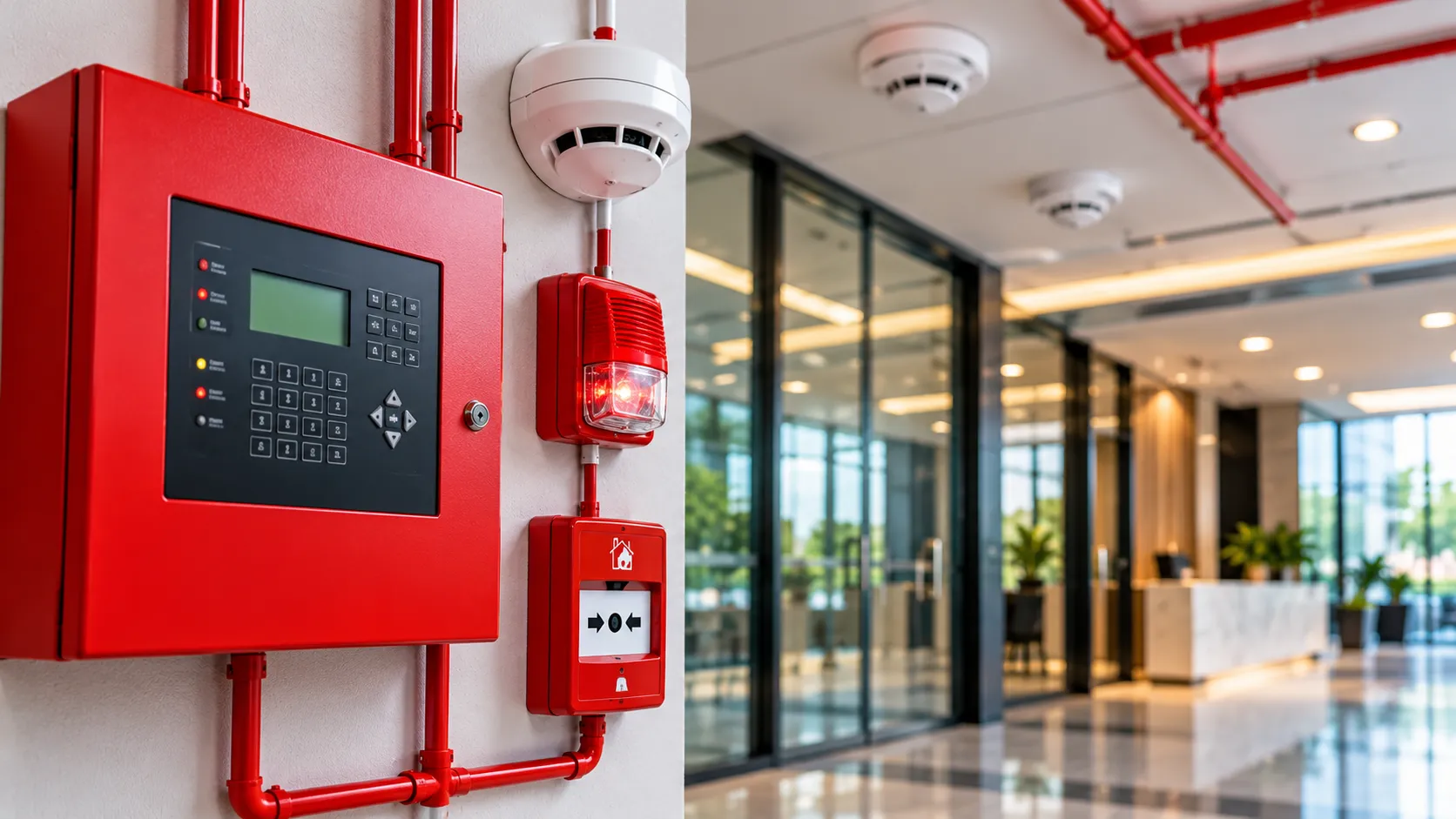
A commercial fire alarm system combines detection devices, notification appliances, and control equipment to identify potential fire conditions and alert people in the building. The appropriate configuration depends on the property’s needs and applicable requirements.
Key components include:
- Detection devices: Smoke detectors, heat detectors, and other approved devices serve different purposes. Selection depends on the environment and expected fire risks.
- Notification appliances: Audible alarms and visual notification devices alert occupants. Their placement should provide suitable coverage for the building and its occupants.
- Fire alarm control panel: The panel receives information from connected devices and displays alarm or system fault conditions.
- Monitoring and signaling: Determine how alarm signals must be communicated and whether external monitoring is required.
- System integration: Some properties need the fire alarm system to coordinate with other fire safety functions. Integration must follow the approved design and applicable requirements.
The goal is to select a system with the right combination of features for the building, rather than choosing equipment based only on the number of devices or specifications.
How Does Building Type Affect Fire Alarm System Selection?
Building use affects detection requirements, notification coverage, and evacuation considerations. The system should reflect the property’s actual conditions.
Offices and Retail Buildings
Offices and retail spaces may contain meeting rooms, corridors, storage areas, and public-facing spaces. Planning should account for the building layout and provide suitable detection and notification coverage throughout the areas identified in the design.
Warehouses and Industrial Facilities
Warehouses may have high ceilings, large storage areas, and changing arrangements of stored goods. Industrial facilities may also contain dust, heat, or equipment that affects detector suitability. These conditions require careful assessment before selecting devices and determining their placement.
Multi-Tenant and Special-Use Buildings
Buildings with multiple occupants may have shared spaces, different operational needs, and separate responsibilities. Healthcare, educational, hospitality, and other specialized facilities may also have additional fire safety considerations.
A qualified fire alarm professional can assess these differences and help determine a suitable system design.
What Fire Alarm Codes and Compliance Requirements Should You Check?
Commercial fire alarm requirements depend on the property’s occupancy, building characteristics, location, and applicable fire and building codes. Businesses should confirm the requirements that apply to their specific premises before purchasing or installing equipment.
Important considerations include:
- Required detection and notification functions.
- Applicable local codes and adopted standards.
- Installation, inspection, and acceptance testing requirements.
- System documentation and approval procedures.
- Ongoing inspection, testing, and maintenance obligations.
Requirements can differ between properties, so businesses should not assume that a system suitable for one building will automatically meet another building’s needs. The relevant authority having jurisdiction and qualified fire alarm professionals can help clarify project-specific requirements.
How Much Does a Commercial Fire Alarm System Cost?
The cost of a commercial fire alarm system depends on the building, the equipment required, and the complexity of the installation. A reliable estimate generally requires an assessment of the premises and its existing infrastructure.
Common cost factors include:
- Building size, layout, and number of floors.
- Type and quantity of detection and notification devices.
- Existing wiring and equipment.
- Installation access and site conditions.
- Required system integrations, testing, and documentation.
- Ongoing inspection and maintenance.
The lowest initial quote may not provide the best long-term value if the proposed system does not meet the property’s requirements. Compare proposals based on system suitability, equipment included, installation scope, testing, and future maintenance needs.
What Maintenance Does a Commercial Fire Alarm System Need?
A fire alarm system requires ongoing inspection, testing, and maintenance after installation. These activities help identify faults, maintain system readiness, and address issues that could affect performance.
Before choosing a system, consider whether it can be maintained effectively, whether compatible replacement components are available, and how easily it can accommodate planned building changes.
Businesses should establish procedures for responding to alarms and system faults. Staff responsible for building safety should understand the system’s basic indicators and follow the property’s emergency procedures.
Inspection and testing schedules must follow applicable codes, adopted standards, manufacturer instructions, and local requirements. Keeping accurate maintenance records and addressing identified problems promptly supports responsible system management.
How Cisco Fire Systems Helps With Commercial Fire Alarm Installation?
Cisco Fire Systems helps businesses identify suitable fire alarm solutions based on their building’s layout, occupancy, existing infrastructure, and fire safety requirements.
A property-specific assessment helps identify the appropriate system functions and installation considerations for the premises. Cisco Fire Systems can discuss a property’s fire alarm needs and help determine the next steps, including arranging a site survey to evaluate the installation requirements.
As a family-owned company since 1982, Cisco Fire Systems brings an established history in fire and security solutions. Businesses planning a new commercial fire alarm installation or reviewing their existing fire alarm systems can contact Cisco Fire Systems to discuss their requirements and explore suitable solutions for their properties.
Conclusion
Choosing the right fire alarm system for a commercial building involves evaluating its layout, occupancy, fire risks, essential system features, compliance requirements, installation costs, and maintenance needs. A building-specific approach helps businesses select a system that is appropriate for the property’s intended use and applicable safety requirements.
Frequently Asked Questions
1. How do I choose the right fire alarm system for a commercial building?
Start by assessing the building’s size, occupancy, layout, potential fire hazards, and applicable safety requirements. Then evaluate detection devices, notification coverage, control panel functions, and required integrations. A qualified professional can help determine a suitable design.
2. What type of fire alarm system is best for a commercial building?
The most suitable system depends on the building’s use, layout, fire risks, and applicable codes. Offices, warehouses, retail properties, and specialized facilities may have different requirements. A property assessment helps determine the appropriate configuration.
3. What affects the cost of commercial fire alarm installation?
Costs depend on building size, the number and type of devices, existing infrastructure, installation complexity, required integrations, and testing requirements. Ongoing inspection and maintenance can also affect long-term costs.
4. Are fire alarm systems required in all commercial buildings?
Requirements vary according to jurisdiction, occupancy, building characteristics, and applicable fire and building codes. Businesses should confirm the rules for their property with the relevant authority or a qualified fire alarm professional.
5. How often should a commercial fire alarm system be inspected and tested?
Inspection and testing frequency depends on applicable codes, adopted standards, system requirements, and local regulations. Businesses should follow the schedule that applies to their premises and maintain records of inspections, tests, and corrective actions.
About the author

Victor Gaier
Victor Gaier is an Electrical Engineer with 40+ years of experience specializing in fire alarm systems, CCTV, access control, intrusion alarms, and commercial security solutions across Nassau County and Long Island.
Share this article
Frequently Asked Questions
1. How does Cyberx protect business data?
2. Is Cyberx suitable for small businesses?
3. Does Cyberx support cloud security?
4. How quickly does Cyberx respond to threats?
5. Can Cyberx integrate with existing systems?
Related Blogs
Explore more expert insights, tips, and updates on fire protection and security solutions.

Need Assistance? Get Your Free Site Survey
Protect your home or business with reliable fire protection and security solutions from Cisco Fire Systems. Tell us about your property and security needs, and our team will recommend the right solution for you.