- Published
- Victor Gaier
- 5 min Read
Magnetic Locks vs Electric Strikes: Which Is Right for Your Building?
Summarize With:
In This Article
Magnetic locks and electric strikes are both used to control access to commercial and residential buildings, but they secure doors in different ways. A magnetic lock uses electromagnetic force to hold a door closed, while an electric strike releases the existing mechanical latch when access is approved. The better option depends on the door type, security requirements, emergency exit needs, existing hardware, and installation conditions.
Understanding the difference between magnetic locks and electric strikes can help property owners choose an electronic locking system that supports security, convenience, and safe building access.
What Is a Magnetic Lock?
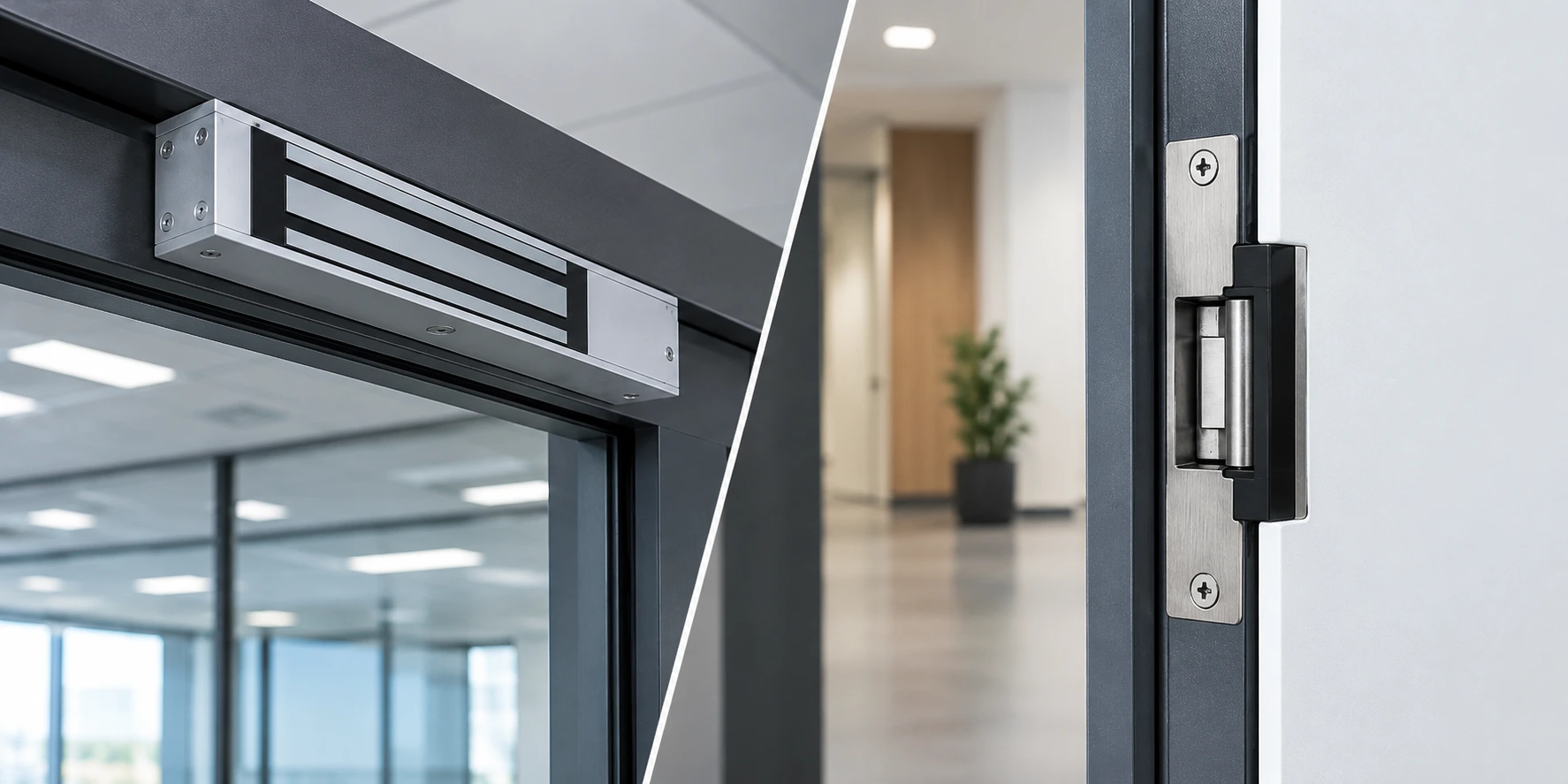
A magnetic lock, also called a maglock or electromagnetic lock, uses an electromagnet and an armature plate to hold a door closed. The magnet is usually mounted on the door frame or header, while the armature plate is attached to the door.
When power is supplied, the magnet creates a holding force that keeps the door secured. When power is removed, the magnetic force stops and the door releases.
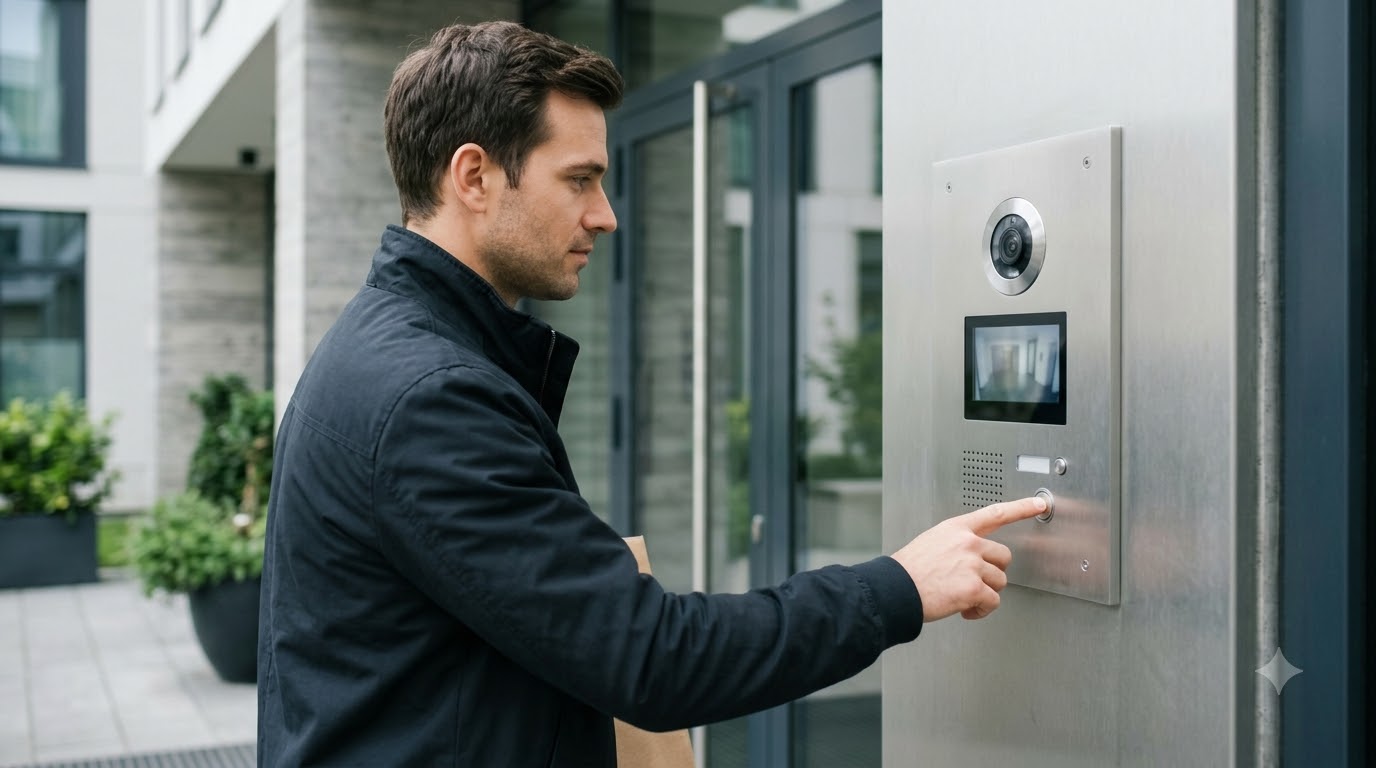
Magnetic locks are commonly used with access control systems, card readers, keypads, video intercoms, and other electronic security equipment. They can be useful when a building needs controlled entry without relying on a traditional mechanical latch.
Common Applications of Magnetic Locks
Magnetic locks may be suitable for:
- Commercial office entrances
- Glass doors with compatible mounting brackets
- School and educational facility entrances
- Healthcare and medical office doors
- Staff-only entrances
- Restricted storage and equipment rooms
- High-traffic controlled entry points
- Doors that do not have a suitable mechanical latch
What Is an Electric Strike?
An electric strike is an electronic locking device that works with a compatible mechanical lockset or latch. Instead of replacing the entire lock, the electric strike is installed in the door frame where the standard strike plate would normally be located.
When a person presents an approved credential, the electric strike releases the latch and allows the door to open. The door can then close and latch again after entry.
This type of locking hardware is often useful for buildings that want electronic access control while keeping an existing lever handle, knob, or mechanical lock.
Common Applications of Electric Strikes
Electric strikes may be appropriate for:
- Standard wood or metal doors
- Office entrances
- Apartment building entry doors
- Interior restricted areas
- Doors with compatible mechanical locksets
- Retrofit projects
- Buildings that need to retain mechanical key operation
The door frame, latch shape, lockset, door alignment, and available space must be checked before selecting an electric strike.
Magnetic Locks vs Electric Strikes: Key Differences
Feature | Magnetic Locks | Electric Strikes |
Locking method | Electromagnetic force holds the door closed | Releases an existing mechanical latch |
Installation | Usually mounted on the frame and door surface | Installed in the door frame |
Mechanical latch | Usually not required | Required |
Power-loss behavior | Generally fail-safe | Can be fail-safe or fail-secure |
Mechanical key use | Usually not provided through the lock itself | Existing lockset may continue to operate |
Appearance | May be visible on the door and frame | Often more discreet |
Best use | Glass doors, controlled entrances, and selected retrofit applications | Standard doors with compatible mechanical hardware |
Main consideration | Mounting, continuous power, and emergency release | Door compatibility, latch operation, and frame preparation |
The primary difference is how the door remains secured. A magnetic lock holds the door using electromagnetic force, while an electric strike controls the release of a mechanical latch.
Which Is More Secure, a Magnetic Lock or an Electric Strike?
Neither option is automatically more secure in every application. The overall security of a door depends on the complete installation, including the door, frame, hardware, access control system, and maintenance.
Important factors include:
- Door and frame construction
- Lock or latch quality
- Holding force or latch strength
- Mounting brackets and fasteners
- Access credential management
- Door position sensors
- Request-to-exit devices
- Alarm integration
- Power supply and backup power
- Proper installation and testing
Magnetic locks may be useful when strong electromagnetic holding force and surface-mounted installation are important. Electric strikes may be preferable when the building needs to retain a mechanical latch or key operation.
The best choice should be based on the complete door assembly rather than the lock type alone.
Which Lock Is Best for Different Building Applications?
Magnetic Locks May Be Suitable For
Magnetic locks are often considered for glass doors, controlled commercial entrances, and doors without a suitable mechanical latch. They may also be useful for staff-only areas, administrative offices, storage rooms, and other restricted spaces.
Schools, healthcare facilities, hotels, banks, and manufacturing properties may use magnetic locks as part of an integrated access control system.
Electric Strikes May Be Suitable For
Electric strikes are often considered for standard wood or metal doors with compatible locksets. They can be a practical choice for offices, apartment entrances, and retrofit projects where the existing mechanical hardware should remain in place.
They may also be appropriate when occupants need to use a mechanical key during certain conditions, depending on the selected lockset and electric strike configuration.
Installation and Integration Considerations
Installing door locks involves more than selecting a lock and connecting power. The system should be planned around the door type, frame construction, traffic level, access requirements, and existing security infrastructure.
A professional installation should review:
- Door and frame compatibility
- Existing lock or latch
- Door alignment and closing pressure
- Cable routing
- Power supply and battery backup
- Access control panel compatibility
- Card readers, keypads, or video intercoms
- Emergency release devices
- Fire alarm integration
- Door position monitoring
- Testing and maintenance requirements
Magnetic Lock Solutions by Cisco Fire Systems
Cisco Fire Systems provides magnetic locks and security door locks for commercial and residential buildings requiring reliable electronic access control. Our magnetic locks can be integrated with access control systems, card readers, keypads, video intercoms, CCTV, and other security equipment to provide controlled and convenient door access.
Our team can help assess your door type, frame, access requirements, emergency exit needs, and existing security infrastructure to recommend a suitable magnetic lock solution. With professional installation and integration, Cisco Fire Systems can help make magnetic locks part of a complete and reliable building security system.
Conclusion
Magnetic locks and electric strikes provide electronic access control, but they are designed for different door conditions. Magnetic locks may be suitable for glass doors, controlled entrances, and applications requiring electromagnetic holding force. Electric strikes may be better for standard doors with compatible mechanical latches.
The decision should consider door construction, emergency exit requirements, power-loss behavior, existing hardware, and integration with other security systems. Cisco Fire Systems can help assess your building, recommend suitable locking hardware, and integrate it with access control, video intercoms, CCTV, fire alarms, and low-voltage infrastructure.
Frequently Asked Questions
1. What is the difference between a magnetic lock and an electric strike?
A magnetic lock uses an electromagnet and armature plate to hold a door closed. An electric strike releases a compatible mechanical latch when access is authorized. Magnetic locks are generally fail-safe, while electric strikes may be fail-safe or fail-secure.
2. Are magnetic locks safer than electric strikes?
Neither is automatically safer. Magnetic locks can support fail-safe release, while electric strikes may work with existing mechanical exit hardware. The correct choice depends on the door, emergency exit requirements, fire safety design, and installation quality.
3. Do electric strikes work with existing locks?
Yes, electric strikes are designed to work with compatible mechanical latches and locksets. The door frame, latch shape, lock type, and alignment must be checked before installation.
4. What happens to a magnetic lock during a power outage?
A typical magnetic lock releases when power is removed. Emergency release devices, fire alarm interfaces, and backup power arrangements must be designed according to the building’s safety and security requirements.
5. Which is better for glass doors?
Magnetic locks are often considered for glass doors because suitable brackets can allow installation without a traditional latch. The final choice depends on the glass door design, frame, mounting options, and emergency exit requirements.
6. Can both systems connect to access control?
Yes. Magnetic locks and electric strikes can connect with card readers, keypads, video intercoms, access control panels, request-to-exit devices, and door monitoring equipment when the components are compatible.
About the author

Victor Gaier
Victor Gaier is an Electrical Engineer with 40+ years of experience specializing in fire alarm systems, CCTV, access control, intrusion alarms, and commercial security solutions across Nassau County and Long Island.
Share this article
Frequently Asked Questions
1. How does Cyberx protect business data?
2. Is Cyberx suitable for small businesses?
3. Does Cyberx support cloud security?
4. How quickly does Cyberx respond to threats?
5. Can Cyberx integrate with existing systems?
Related Blogs
Explore more expert insights, tips, and updates on fire protection and security solutions.


Need Assistance? Get Your Free Site Survey
Protect your home or business with reliable fire protection and security solutions from Cisco Fire Systems. Tell us about your property and security needs, and our team will recommend the right solution for you.