
- Published
- Victor Gaier
- 5 min Read
Commercial Intrusion Alarm Systems: Types, Features, and Benefits
Summarize With:
In This Article
Commercial properties face security risks that can vary based on their size, layout, operating hours, and business activities. Unauthorized entry, after-hours activity, and access to restricted areas can put employees, equipment, inventory, and sensitive information at risk. A commercial intrusion alarm system provides an important layer of protection by detecting suspicious activity and generating an alert when a protected area is breached.
Modern intrusion alarm systems can use motion sensors, door and window contacts, glass-break detectors, perimeter detection, alarm panels, and monitoring services. The right combination depends on the property’s security requirements.
Understanding the types, features, and benefits of these systems can help business owners and facility managers choose an intrusion detection solution suited to their property.
What is a Commercial Intrusion Alarm System?
A commercial intrusion alarm system is a security solution designed to detect unauthorized entry or suspicious activity within or around a business property and generate an alarm or notification.
These systems can protect doors, windows, interior spaces, restricted rooms, and selected outdoor areas. When a sensor detects an intrusion condition, it sends a signal to the alarm control panel. The system can then activate an alarm, send a notification, or communicate with a monitoring service, depending on its configuration.
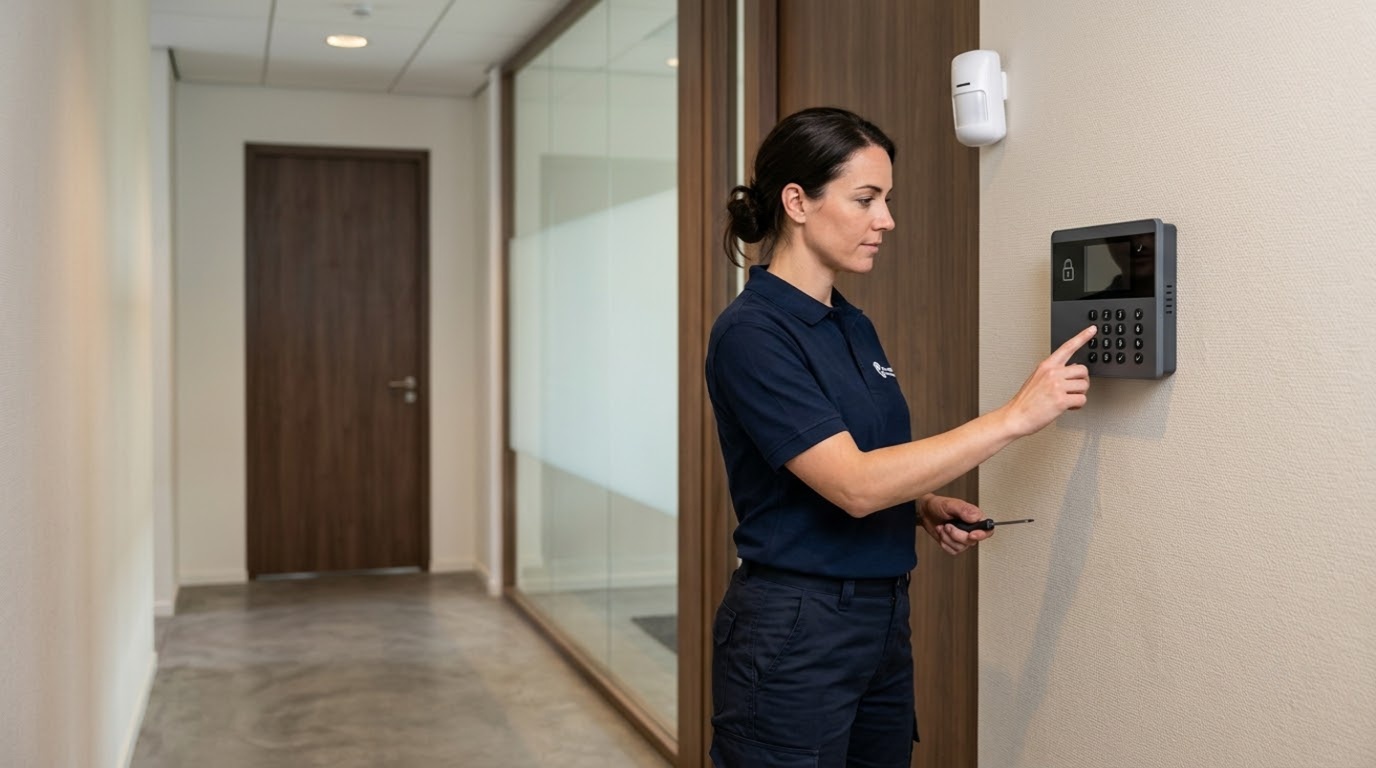
Cisco Fire system provides intrusion alarm installation and monitoring with detection options including motion sensors, door and window contacts, glass-break detectors, and perimeter protection.
How Do Commercial Intrusion Alarm Systems Work?
Commercial intrusion detection systems generally follow a simple process:
Detection → Signal → Alarm Panel → Alert → Response
A sensor first detects activity, such as an opened protected door or movement in a monitored area. The sensor communicates the event to the alarm control panel, which processes the signal according to the system configuration.
The system can then activate a local alarm or send an alert to designated personnel or a monitoring service.
Proper sensor placement is important because the effectiveness of an alarm system depends on protecting the areas where unauthorized access is most likely to occur.
Types of Commercial Intrusion Alarm Systems
Different properties require different detection methods. Multiple technologies can be combined to provide appropriate coverage.
1. Perimeter Intrusion Detection
Perimeter detection protects selected exterior areas of a commercial property. Depending on the site, this can include perimeter beams and other exterior detection technologies.
It can be useful for warehouses, industrial properties, large commercial sites, and businesses with outdoor equipment or storage areas.
2. Interior Intrusion Detection
Interior detection commonly uses motion sensors to monitor selected areas inside a building. These devices can help protect offices, warehouses, retail spaces, storage rooms, and restricted areas.
3. Door and Window Detection
Door and window contacts detect when protected openings are opened. They are commonly used on exterior doors, emergency exits, windows, service entrances, and restricted rooms.
4. Glass-Break Detection
Glass-break detectors provide additional protection for properties with vulnerable glass doors or windows. They can detect characteristics associated with breaking glass, depending on the technology used.
5. Wired and Wireless Systems
Commercial alarm systems can use wired, wireless, or hybrid technologies.
Wired systems can be practical when cabling can be installed efficiently, particularly during construction or renovation. Whereas wireless systems can offer greater installation flexibility where extensive cabling is difficult.
The right option depends on the building, equipment, installation conditions, security requirements, and future expansion needs. Cisco Fire system offers wired & wireless, and smart alarm integration options.
Key Components and Features of Commercial Intrusion Alarm Systems
A commercial intrusion alarm system typically includes:
- Alarm control panel: Processes signals from connected sensors.
- Motion sensors: Detect movement in protected interior areas.
- Door and window contacts: Detect unauthorized opening of protected entrances and windows.
- Glass-break detectors: Help protect vulnerable glass doors and windows.
- Alarm monitoring: Sends alerts to designated personnel or a monitoring service.
- Remote management: Allows authorized users to manage the system or receive notifications remotely.
- System integration: Can work with CCTV and access control systems.
Benefits of Commercial Intrusion Alarm Systems
Helps Deter Unauthorized Access
Visible security equipment can discourage unauthorized activity by showing that a property has protective measures in place.
Provides Early Detection
Sensors can identify activity at protected entry points or monitored areas, allowing businesses to respond according to their security procedures.
Protects Restricted Areas
Businesses can protect storage rooms, server rooms, offices, equipment areas, and other locations containing valuable or sensitive assets.
Supports After-Hours Security
Intrusion alarms provide an additional security layer when employees have left the building and normal operations have stopped.
Improves Security Awareness
Alarm notifications can help authorized personnel identify potential security events and determine appropriate next steps.
Complements Other Security Systems
An intrusion alarm can work alongside CCTV and access control to create multiple layers of commercial security.
Which Businesses Can Benefit From Intrusion Alarm Systems?
- Offices: Protect entrances, restricted rooms, and after-hours areas.
- Retail stores: Monitor entrances, storage spaces, and other vulnerable locations.
- Warehouses: Protect inventory, loading areas, and selected perimeter zones.
- Schools and institutions: Monitor designated entrances and restricted areas.
- Industrial properties: Help protect large facilities, equipment, materials, and exterior areas.
- Multi-tenant buildings: Provide security for shared entrances and restricted spaces.
The system should be designed around the property’s layout and security risks rather than using the same configuration for every business.
How to Choose the Right Commercial Intrusion Alarm System
Businesses should consider the following before selecting an intrusion alarm installation solution:
- Building size and layout
- Number of entrances and exits
- Windows and vulnerable openings
- Restricted areas
- Interior and exterior security requirements
- Operating hours
- Existing CCTV and access control
- Monitoring requirements
- Wired or wireless installation conditions
- Future expansion
- Maintenance requirements
A professional site assessment can help determine appropriate sensor locations and the right combination of detection technologies.
Professional Intrusion Alarm Installation and Maintenance
Professional intrusion alarm installation involves more than placing sensors around a property. Installation should consider sensor positioning, system configuration, wiring or wireless communication, alarm zones, testing, user access, and future maintenance.
Professional installation can also help businesses coordinate intrusion alarms with existing security infrastructure.
Cisco Fire Systems provides intrusion alarm installation, monitoring, maintenance, and support. Its intrusion alarm solutions include motion sensors, door and window contacts, glass-break detection, wired and wireless options, and monitoring.
Regular maintenance should follow manufacturer recommendations, applicable requirements, and the property’s service agreement.
Conclusion
A commercial intrusion alarm system provides an important layer of protection against unauthorized access and suspicious activity. By combining detection devices, alarm controls, communication, and monitoring, businesses can protect entrances, interior areas, restricted spaces, and selected perimeter zones.
The right system depends on the property’s layout, security risks, operating requirements, and future needs. Professional assessment and installation can help ensure that detection devices are positioned correctly and the system is configured for the business.
For businesses looking for commercial intrusion alarm installation, monitoring, and security solutions, Cisco Fire Systems can provide a solution based on the property’s specific security requirements.
Frequently Asked Questions
1. What is a commercial intrusion alarm system?
A commercial intrusion alarm system detects unauthorized entry or suspicious activity at a business property and generates an alarm or notification based on its configuration.
2. How does an intrusion alarm system work?
Sensors detect activity and send information to an alarm control panel. The system processes the event and can generate an alarm, notification, or monitoring signal.
3. What are the main types of intrusion alarm systems?
Common types include perimeter detection, interior motion detection, door and window contacts, and glass-break detection. Systems can also use wired, wireless, or hybrid technologies.
4. What sensors are used in commercial intrusion alarms?
Common devices include motion sensors, door and window contacts, glass-break detectors, and perimeter detection equipment.
5. Are commercial intrusion alarms monitored 24/7?
Some commercial alarm systems include 24/7 monitoring. Availability depends on the selected system and monitoring service.
About the author

Victor Gaier
Victor Gaier is an Electrical Engineer with 40+ years of experience specializing in fire alarm systems, CCTV, access control, intrusion alarms, and commercial security solutions across Nassau County and Long Island.
Share this article
Frequently Asked Questions
1. How does Cyberx protect business data?
2. Is Cyberx suitable for small businesses?
3. Does Cyberx support cloud security?
4. How quickly does Cyberx respond to threats?
5. Can Cyberx integrate with existing systems?
Related Posts
Insight on growth, leadership, and navigating change with clarity and heart.

Need assistance? Please fill the form
Sed do eiusmod tempor incididunt ut labore et dolore magna aliqua. Ut enim ad minim veniam, quis nostrud exercitation ullamco laboris nisi ut aliquip ex ea commodo consequat.

Get In Touch
Do it today. Remind yourself of someone you know who died suddenly and the fact that there is no guarantee that tomorrow will come.