- Published
- Victor Gaier
- 5 min Read
Commercial Security Camera Installation for Your Business: A Complete Guide
Summarize With:
In This Article
Key Takeaways
- Commercial security camera installation helps protect people, property, and assets.
- Proper camera placement is essential for effective surveillance coverage.
- Modern business security cameras support remote monitoring and real-time alerts.
- Commercial CCTV systems can integrate with fire alarms, intrusion alarms, and video intercom systems.
- Professional installation improves reliability, scalability, and long-term performance.
- Surveillance systems provide valuable evidence during investigations and insurance claims.
- Choosing the right security partner helps maximize return on investment.
Security is one of the most important investments a business can make. Commercial security camera installation is the process of designing, installing, and configuring surveillance systems that help businesses monitor activity, deter crime, improve workplace safety, and gather evidence when incidents occur. Modern business security cameras offer advanced features such as remote monitoring, motion detection, high-definition video recording, and real-time alerts.
This guide explains how commercial CCTV systems work, their benefits, common camera types, installation best practices, and how to choose the right solution for your business.
What Is Commercial Security Camera Installation?
Commercial security camera installation involves deploying surveillance cameras, recording devices, network infrastructure, and monitoring software across a business property to provide continuous visibility and security.
Unlike residential systems, commercial security camera systems are designed to cover larger facilities, support multiple users, and protect higher-risk areas. These systems can be customized for offices, retail stores, warehouses, healthcare facilities, schools, manufacturing plants, and other commercial environments.
A typical commercial CCTV system may include:
- Indoor security cameras
- Outdoor security cameras
- Network Video Recorders (NVRs)
- Digital Video Recorders (DVRs)
- Cloud-based storage solutions
- Mobile monitoring applications
- Video analytics software
- Low-voltage cabling infrastructure
The primary goal is to create comprehensive coverage, reduce blind spots, and provide reliable surveillance around the clock.
Why Commercial Security Cameras Are Important for Businesses
Businesses face a variety of security challenges, including theft, vandalism, unauthorized access, workplace incidents, and liability claims. A professionally installed surveillance system helps address these risks while improving operational oversight.
Modern commercial CCTV systems provide benefits that extend beyond simple video recording:
- Detect criminal activity
- Improve employee and visitor safety
- Provide evidence during investigations
- Support insurance claims
- Help monitor business operations
- Reduce unauthorized access
- Enhance customer and employee confidence
For many businesses, surveillance systems are no longer considered optional security tools. They are a critical component of a comprehensive commercial security strategy.
Types of Business Security Cameras
Choosing the right camera type is one of the most important steps in a successful commercial security camera installation.
Dome Cameras
Dome cameras are commonly used in offices, retail stores, schools, and restaurants. Their compact design makes them less noticeable while providing wide-angle coverage.
Bullet Cameras
Bullet cameras are highly visible and ideal for outdoor applications. Businesses often install them near entrances, parking lots, loading docks, and perimeter areas.
PTZ Cameras
Pan-Tilt-Zoom (PTZ) cameras allow operators to remotely control viewing angles and zoom in on specific areas. These cameras are commonly used in large commercial properties.
Turret Cameras
Turret cameras provide excellent image quality and flexible positioning. They are suitable for both indoor and outdoor installations.
IP Cameras
IP cameras transmit video over a network rather than traditional coaxial cabling. They offer superior image quality, remote accessibility, and advanced analytics, making them one of the most popular choices for modern commercial CCTV camera systems.
Key Areas to Cover During CCTV Camera Installation
Proper camera placement plays a major role in the effectiveness of a surveillance system.
Main Entrances and Exits
Monitoring entry and exit points helps track who enters and leaves the building while creating an audit trail of visitor activity.
Parking Lots
Parking areas are often vulnerable to theft, vandalism, and vehicle-related incidents. Security cameras help monitor these locations and improve safety.
Reception Areas
Reception areas experience a high volume of visitor traffic and should be monitored to maintain accountability and security.
Warehouses and Storage Areas
Businesses storing inventory, equipment, or valuable assets should prioritize surveillance in storage locations.
Loading Docks
Loading docks are common targets for theft and unauthorized access. Surveillance helps monitor deliveries and shipping activities.
Cash Handling Areas
Retail stores and service businesses often install cameras near cash registers and payment stations to reduce fraud and theft.
Restricted Access Areas
Server rooms, executive offices, inventory rooms, and data centers often require additional monitoring due to the sensitive nature of the assets they contain.
How Commercial Security Camera Installation Works
A professional installation follows a structured process to ensure reliable performance and long-term effectiveness of building security systems.
1. Security Assessment
Security professionals evaluate the property layout, identify vulnerabilities, and determine surveillance requirements.
2. System Design
A customized security plan is created based on building size, security concerns, and operational goals.
3. Equipment Selection
The appropriate cameras, recording devices, storage solutions, and monitoring platforms are selected.
4. Infrastructure Installation
Network equipment and low-voltage cabling are installed to support communication and video transmission.
5. Camera Placement and Installation
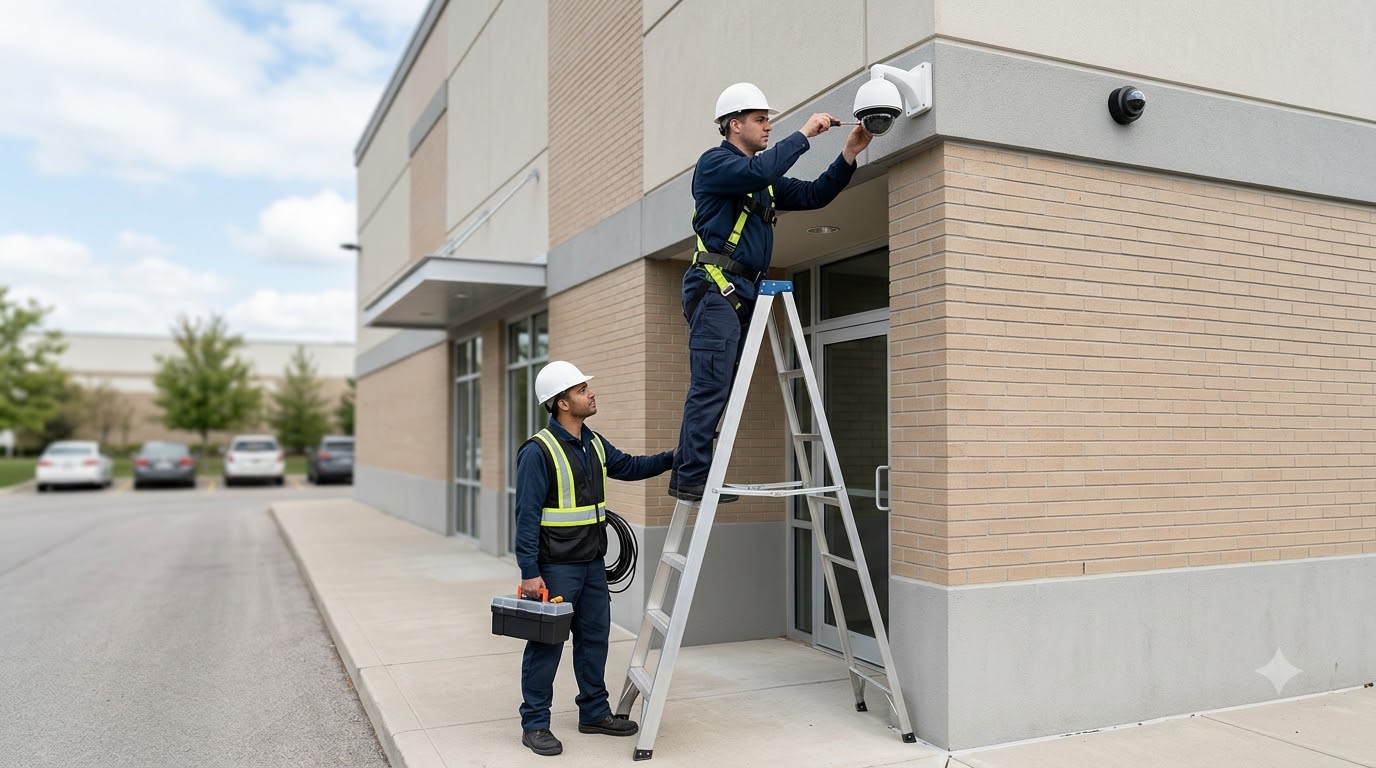
Technicians position cameras strategically to maximize visibility and minimize blind spots.
6. System Configuration
Devices are configured, tested, and optimized to ensure reliable operation.
7. Training and Ongoing Support
Business owners and staff receive guidance on operating and managing the surveillance system effectively.
Industries That Benefit From Commercial Security Camera Installation
Nearly every industry can benefit from business security cameras.
Retail Stores
Retail businesses use surveillance systems to prevent shoplifting, monitor customer activity, and protect employees.
Office Buildings
Office environments benefit from improved visitor management and protection of sensitive business assets.
Warehouses and Distribution Centers
Surveillance helps monitor inventory movement, loading operations, and restricted areas.
Healthcare Facilities
Hospitals and medical offices use security cameras to improve patient safety and monitor critical areas.
Educational Institutions
Schools and universities rely on surveillance systems to improve campus security and monitor public spaces.
Industrial Facilities
Manufacturing plants and industrial sites use CCTV systems to monitor operations, improve safety, and reduce unauthorized access.
Commercial CCTV Systems vs Traditional Security Measures
Feature | Commercial CCTV Systems | Traditional Security Measures |
24/7 Monitoring | Yes | Limited |
Video Evidence | Yes | No |
Remote Access | Yes | No |
Real-Time Alerts | Yes | Limited |
Incident Investigation | Easy | Difficult |
Operational Monitoring | Yes | No |
Scalability | High | Limited |
While traditional security measures remain important, commercial CCTV camera systems provide greater visibility, accountability, and long-term protection.
Why Choose Cisco Fire Systems for Commercial Security Camera Installation?
Cisco Fire Systems, a leading fire security company, helps businesses throughout Nassau County protect their properties with reliable commercial security camera systems tailored to their specific needs. Our team designs and installs surveillance solutions that provide clear visibility, dependable performance, and long-term security.
Businesses choose Cisco Fire Systems for:
- Professional commercial security camera installation
- Customized CCTV solutions for commercial properties
- Strategic camera placement and system design
- Integration with fire alarm and intrusion alarm systems
- Reliable low-voltage cabling and network infrastructure
- Ongoing support and maintenance
Whether you need security camera systems for a small office or a large commercial facility, we deliver solutions designed to help protect your people, property, and assets.
Conclusion
Investing in commercial security camera installation is one of the most effective ways to improve business security and operational visibility. A professionally designed surveillance system helps deter crime, protect employees, monitor daily activities, and provide valuable evidence when incidents occur.
The most effective commercial CCTV systems combine strategic camera placement, high-quality equipment, reliable storage, and integration with other security technologies. Whether you need a few cameras for a small office or a comprehensive surveillance solution for a large commercial facility, professional planning and installation are essential for long-term success.
At Cisco Fire Systems, we help businesses implement customized security camera systems designed to meet their unique operational and security requirements. With the right surveillance solution in place, businesses can create a safer environment for employees, customers, and valuable assets.
Frequently Asked Questions
1. What is commercial security camera installation?
Commercial security camera installation is the process of designing, installing, and configuring surveillance systems for business properties. These systems help monitor activity, improve security, and provide recorded footage for investigations and incident management.
2. How many cameras does a business need?
The number of cameras required depends on property size, building layout, security risks, and monitoring goals. A professional site assessment can help determine the ideal camera quantity and placement.
3. What are the best business security cameras?
The best business security cameras vary by application. Common options include dome cameras, bullet cameras, PTZ cameras, turret cameras, and IP cameras, each offering different advantages depending on the environment.
4. Can I monitor my commercial CCTV system remotely?
Yes. Most modern commercial CCTV systems provide remote access through smartphones, tablets, and computers, allowing users to view live and recorded footage from virtually anywhere.
5. How long do commercial security camera recordings last?
Retention periods depend on storage capacity, camera resolution, recording settings, and business requirements. Many organizations retain footage for 30 to 90 days, while some industries require longer storage periods.
6. What is the difference between CCTV cameras and IP cameras?
Traditional CCTV cameras typically use coaxial cabling and dedicated recording equipment, while IP cameras transmit video over a network and often provide higher image quality, advanced analytics, and remote accessibility.
7. Can security cameras integrate with alarm systems?
Yes. Many modern surveillance systems integrate with intrusion alarms, fire alarms, access control systems, and video intercoms to create a more comprehensive commercial security solution.
About the author

Victor Gaier
Victor Gaier is an Electrical Engineer with 40+ years of experience specializing in fire alarm systems, CCTV, access control, intrusion alarms, and commercial security solutions across Nassau County and Long Island.
Share this article
Frequently Asked Questions
1. How does Cyberx protect business data?
2. Is Cyberx suitable for small businesses?
3. Does Cyberx support cloud security?
4. How quickly does Cyberx respond to threats?
5. Can Cyberx integrate with existing systems?
Related Blogs
Explore more expert insights, tips, and updates on fire protection and security solutions.

Need Assistance? Get Your Free Site Survey
Protect your home or business with reliable fire protection and security solutions from Cisco Fire Systems. Tell us about your property and security needs, and our team will recommend the right solution for you.