
- Published
- Victor Gaier
- 5 min Read
Benefits of Integrated Fire and Security Systems for Commercial Properties
Summarize With:
In This Article
Key Takeaways
- Integrated fire and security systems connect fire alarms, CCTV, access control, intrusion detection, and other technologies into one managed platform
- Integration improves emergency response speed, operational efficiency, and overall commercial building security
- Low-voltage cabling is the critical infrastructure backbone that makes system communication possible
- Standalone systems are harder to manage, slower to respond, and costlier over time
- Scalable systems grow with your business without requiring full replacements
- Working with a single provider reduces vendor complexity and improves accountability
Integrated fire and security systems combine fire alarms, CCTV cameras, access control, intrusion detection, and other technologies into a single, centrally managed solution. For commercial properties, this approach improves emergency response, simplifies building management, reduces long-term costs, and provides a higher level of protection than standalone systems.
Most commercial buildings rely on multiple separate systems to handle fire safety and security. A fire alarm from one provider. A CCTV setup from another. Access control is managed through a third platform. The result is fragmented coverage, slow emergency response, and unnecessary complexity. The North American fire protection market is growing at a 3.5% annual rate, according to Grand View Research. This growth reflects a broader push toward smarter, more connected commercial building security.
This guide explains what integrated fire and security systems are, how they work, and why more businesses are choosing integration over isolated solutions.
What are Integrated Fire and Security Systems?
Integrated fire and security systems are platforms that connect multiple safety and security technologies so they can communicate, share data, and trigger automatic responses across your entire building.
Common components of an integrated system include:
- Fire alarm systems
- CCTV security camera systems
- Access control systems
- Intrusion alarm systems
- Video intercom systems
- Magnetic locks and security door locks
- Networking and low-voltage cabling
- Automatic sliding and swing door operators
Rather than operating independently, these systems share a common infrastructure and work together through centralized software. Low-voltage cabling serves as the backbone that connects every device, making reliable communication between systems possible.
Why Integration Matters for Commercial Properties
Managing separate systems creates real problems. Different vendors, incompatible software platforms, and siloed data all slow your team’s ability to respond when something goes wrong. Building managers spend more time coordinating between providers and less time focused on operations.
Integrated security systems eliminate that friction. A single platform gives you full visibility across your property, reduces vendor complexity, and ensures that your systems can respond to threats automatically, without waiting for manual intervention.
Key Benefits of Integrated Fire and Security Systems
Enhanced Life Safety
When a fire alarm activates, integrated systems can simultaneously unlock emergency exit doors, trigger CCTV cameras to display footage of the affected area, and alert monitoring stations, all without manual input.
Centralized Monitoring
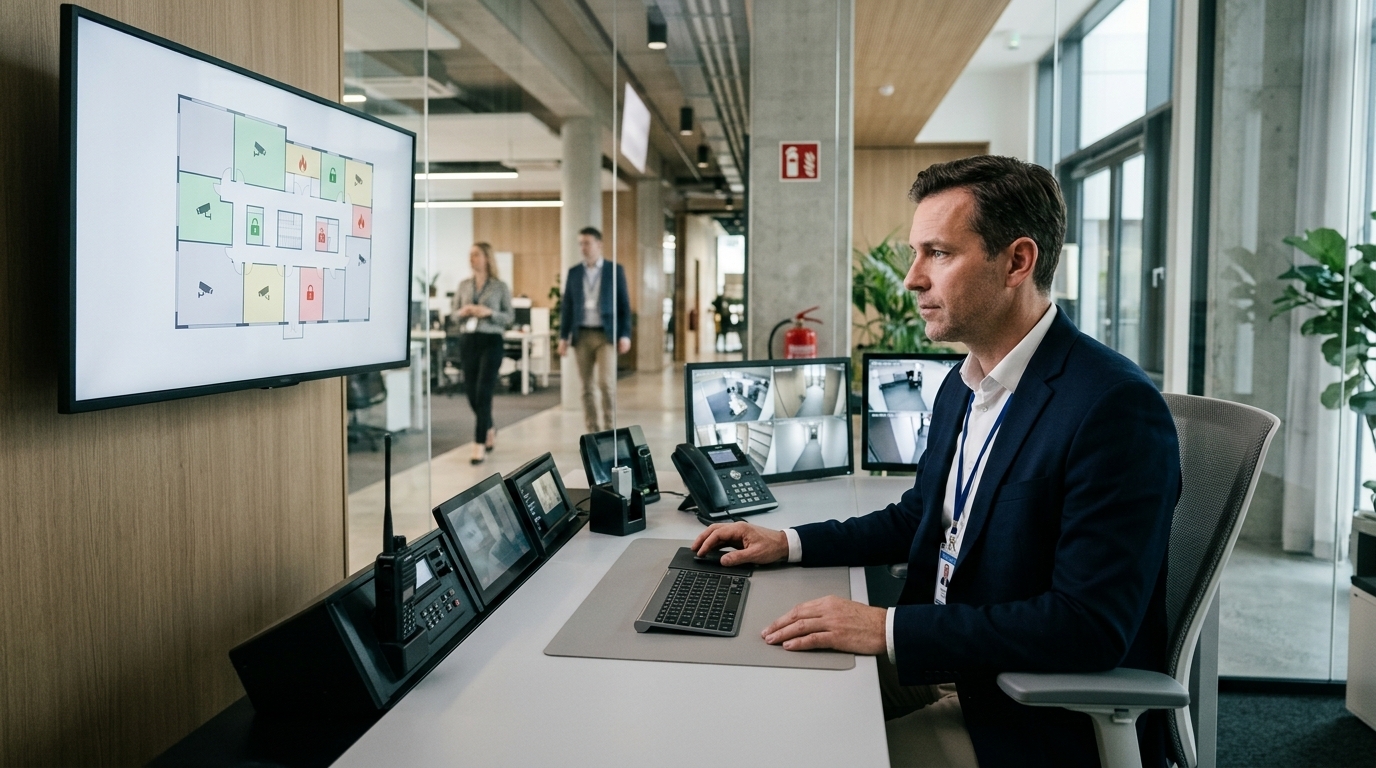
Manage fire alarms, cameras, access logs, and intrusion alerts from one interface. Centralized monitoring reduces blind spots and makes it easier to track building activity in real time.
Faster Emergency Response
Integrated commercial fire alarm systems automatically notify first responders and building occupants the moment a threat is detected. Cross-system communication eliminates the delays that come with siloed setups.
Improved Commercial Building Security
Combining access control, CCTV, and intrusion detection creates layered protection. If an intrusion alarm is triggered, CCTV footage is recorded and flagged automatically, giving you a clear record for review or investigation.
Better Operational Efficiency
Automatic door operators can be configured to respond to access credentials, reducing the need for manual door management. Business security systems that work together require less hands-on oversight.
Scalability
Integrated systems are built to grow with your business. Add new cameras, access points, or sensors without replacing your existing infrastructure.
Lower Long-Term Costs
A single provider handling installation, maintenance, and support reduces overhead. Fewer service calls, unified software licensing, and coordinated inspections all contribute to lower operating costs over time.
How Integrated Systems Work Together
The real value of integrated fire and security systems comes from how each component responds to the others.
- Fire Alarm + Access Control: When a fire alarm activates, door locks automatically disengage to allow safe evacuation through all exit routes.
- Fire Alarm + CCTV: Cameras in the area of the triggered alarm automatically display live footage on the monitoring dashboard, helping staff assess the situation immediately.
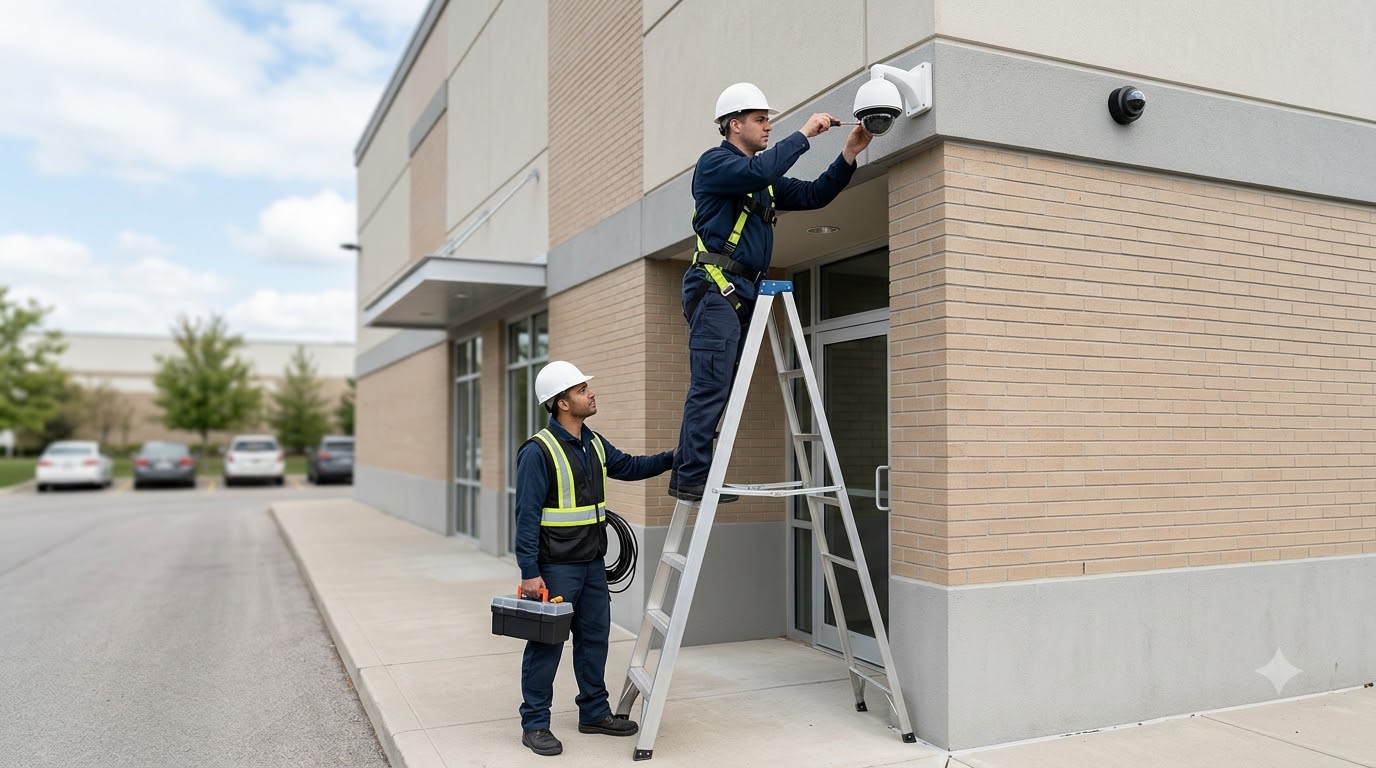
- Intrusion Alarm + CCTV: When motion is detected after hours, CCTV security cameras for businesses begin recording and flag the event for review.
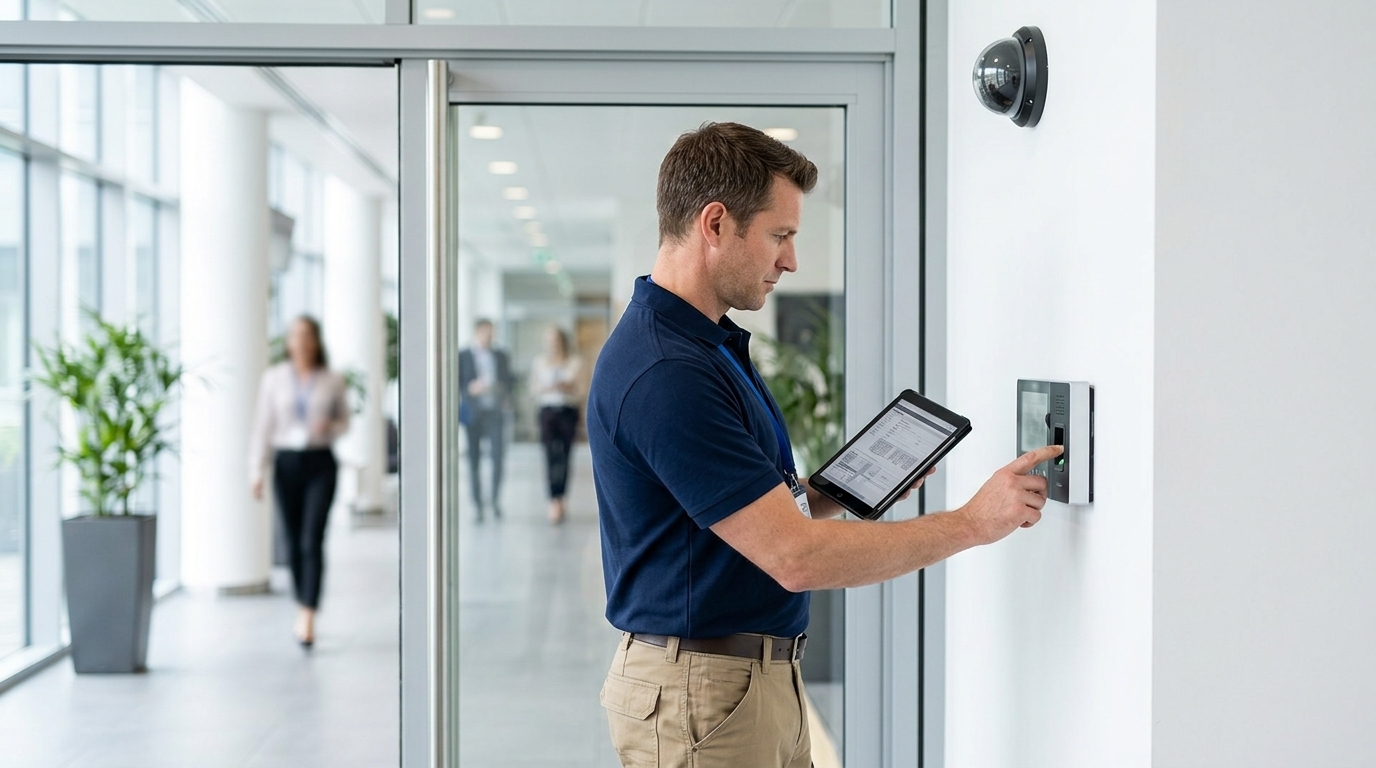
- Video Intercom + Access Control: Visitors are visually verified through a video intercom before access is granted through commercial access control systems.
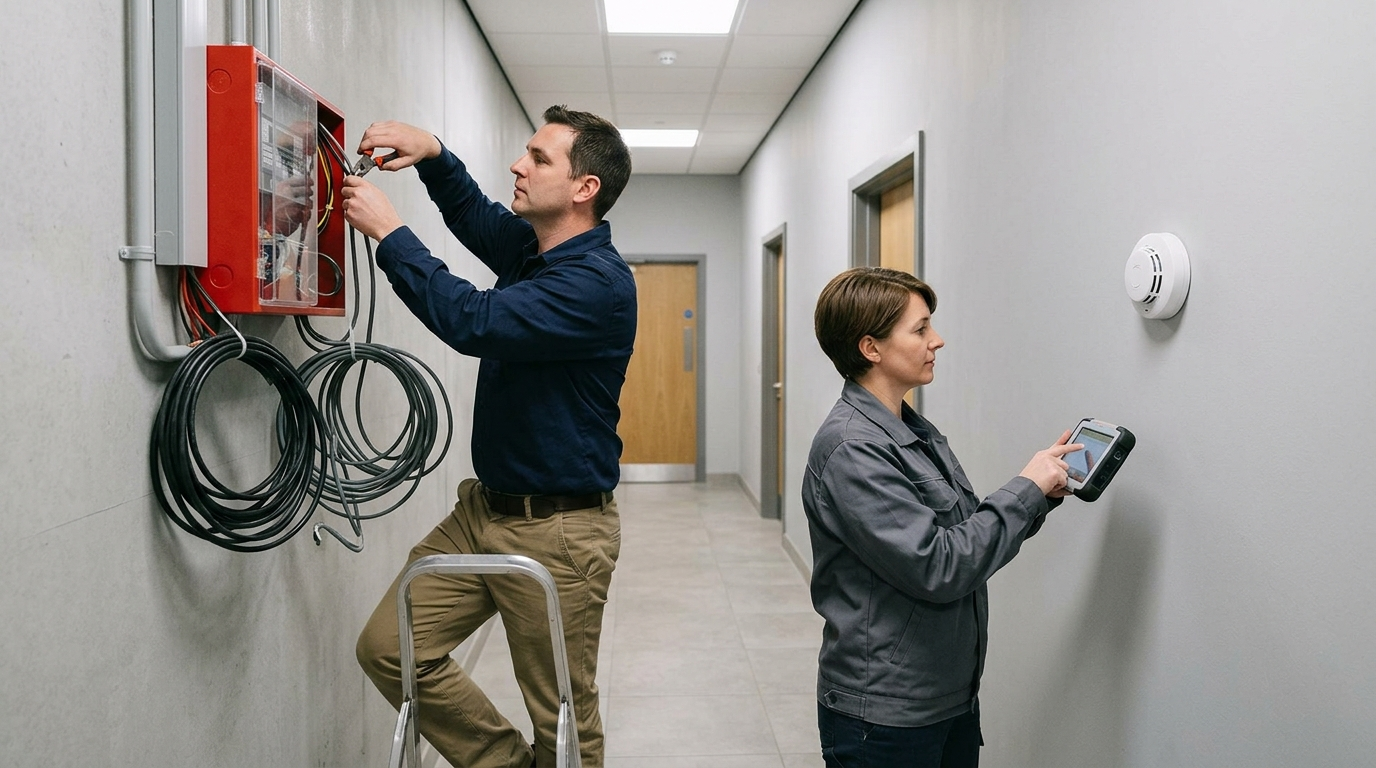
- Low-Voltage Cabling: Every device relies on properly installed low-voltage infrastructure. Without it, systems cannot communicate reliably, regardless of the software platform in use.
Industries That Benefit from Integrated Fire and Security Systems
Integrated commercial security systems are suitable for a wide range of property types, including:
- Office buildings
- Warehouses and distribution centers
- Retail stores
- Healthcare facilities
- Educational institutions
- Industrial facilities
- Multi-tenant commercial properties
Any facility managing multiple entry points, sensitive areas, or high occupant volumes will benefit from a connected, centrally managed approach.
Integrated Fire and Security Systems vs. Standalone Systems
|
Feature |
Integrated Systems |
Standalone Systems |
|
Centralized Management |
Yes, single platform |
No, separate interfaces |
|
Real-Time Communication |
Cross-system automation |
No cross-system response |
|
Emergency Response |
Automatic and immediate |
Manual coordination required |
|
Operational Efficiency |
High |
Low |
|
Scalability |
Built-in |
Limited |
|
Maintenance |
Unified schedule |
Multiple vendor visits |
|
System Visibility |
Complete overview |
Fragmented |
Standalone systems carry a lower upfront cost, but the long-term expense of managing multiple vendors, separate contracts, and disconnected platforms adds up quickly.
Best Practices for Planning an Integrated Security Solution
- Assess your building’s security risks before selecting any system
- Choose scalable systems that can expand as your needs change
- Prioritize compatibility across all hardware and software components
- Invest in professional installation to avoid configuration gaps
- Schedule regular inspections and maintenance to keep systems performing correctly
- Work with a single experienced provider who can take full accountability for your entire setup
Why Choose Cisco Fire Security for Integrated Fire and Security Systems?
Cisco Fire Systems provides integrated fire and security systems for commercial properties throughout Nassau County. Our services cover the full scope of commercial building security, including fire alarm installation, CCTV security camera installation, access control, intrusion alarm systems, video intercom installation, magnetic locks, low-voltage cabling, and automatic door operators.
Every project starts with a site assessment. We design systems around your building’s layout, occupancy type, and specific security requirements, then handle installation, programming, testing, and ongoing support. You work with one team across every system, not a different vendor for each component.
For related reading, explore our guides on [Commercial Building Security Systems], Commercial Security Camera Installation for Businesses, and How to Choose the Right Fire Alarm Installation Company.
Conclusion
Integrated fire and security systems help businesses create a safer, more efficient, and easier-to-manage commercial environment. By connecting fire alarms, CCTV cameras, access control, and other security technologies, businesses can improve emergency response, simplify operations, and strengthen overall building protection. Working with an experienced provider ensures every system functions together reliably and can adapt as your security needs grow.
Separate systems leave gaps. Integrated fire and security systems close them. Cisco Fire Systems helps Nassau County businesses design, install, and maintain fully integrated commercial security systems that protect people, assets, and operations.
Contact our team to schedule a site assessment and learn what an integrated solution would look like for your property.
Frequently Asked Questions
1. What are integrated fire and security systems?
Integrated fire and security systems connect fire alarms, CCTV cameras, access control, intrusion alarms, and other security technologies into one centralized platform. This allows the systems to communicate, automate responses, and improve overall building safety.
2. What are the benefits of integrating fire and security systems?
Integrated systems improve emergency response, simplify monitoring, strengthen commercial building security, reduce maintenance complexity, and lower long-term operating costs.
3. Can fire alarm systems integrate with access control?
Yes. When a fire alarm is activated, integrated access control systems can automatically unlock designated exit doors to support safe evacuation while maintaining compliance with fire safety requirements.
4. Which businesses benefit most from integrated security systems?
Office buildings, warehouses, retail stores, healthcare facilities, schools, industrial sites, and other commercial properties with multiple access points benefit from integrated security solutions.
5. Why is low-voltage cabling important for integrated systems?
Low-voltage cabling connects fire alarms, security cameras, access control devices, and other technologies, enabling reliable communication between all integrated systems.
6. Can integrated systems be expanded as a business grows?
Yes. Most integrated fire and security systems are scalable, allowing businesses to add cameras, access control devices, alarms, and other components without replacing the existing infrastructure.
About the author

Victor Gaier
Victor Gaier is an Electrical Engineer with 40+ years of experience specializing in fire alarm systems, CCTV, access control, intrusion alarms, and commercial security solutions across Nassau County and Long Island.
Share this article
Frequently Asked Questions
1. How does Cyberx protect business data?
2. Is Cyberx suitable for small businesses?
3. Does Cyberx support cloud security?
4. How quickly does Cyberx respond to threats?
5. Can Cyberx integrate with existing systems?
Related Posts
Insight on growth, leadership, and navigating change
with clarity and heart.

Need assistance? Please fill the form
Sed do eiusmod tempor incididunt ut labore et dolore magna aliqua. Ut enim ad minim veniam, quis nostrud exercitation ullamco laboris nisi ut aliquip ex ea commodo consequat.

Get In Touch
Do it today. Remind yourself of someone you know who died suddenly and the fact that there is no guarantee that tomorrow will come.